What industrial pressure cleaning involves
Industrial pressure cleaning is not a domestic water blaster on a driveway. It combines high water pressure, the right flow rate, industrial degreasers and — where the surface suits it — hot water, to shift contamination that has been building up for years.
Method is set by the surface. Concrete and steel take more pressure than cladding, coated floors or older brickwork. On painted and coated surfaces we back the pressure off and let chemistry and dwell time do the work rather than stripping the finish.
Containment, water management and access are agreed with your site before we start, so runoff goes where your site requires and production keeps moving around us.
Water is a problem on your equipment? Electrical gear, motors and control panels are better handled with dry ice blasting — no liquid involved.
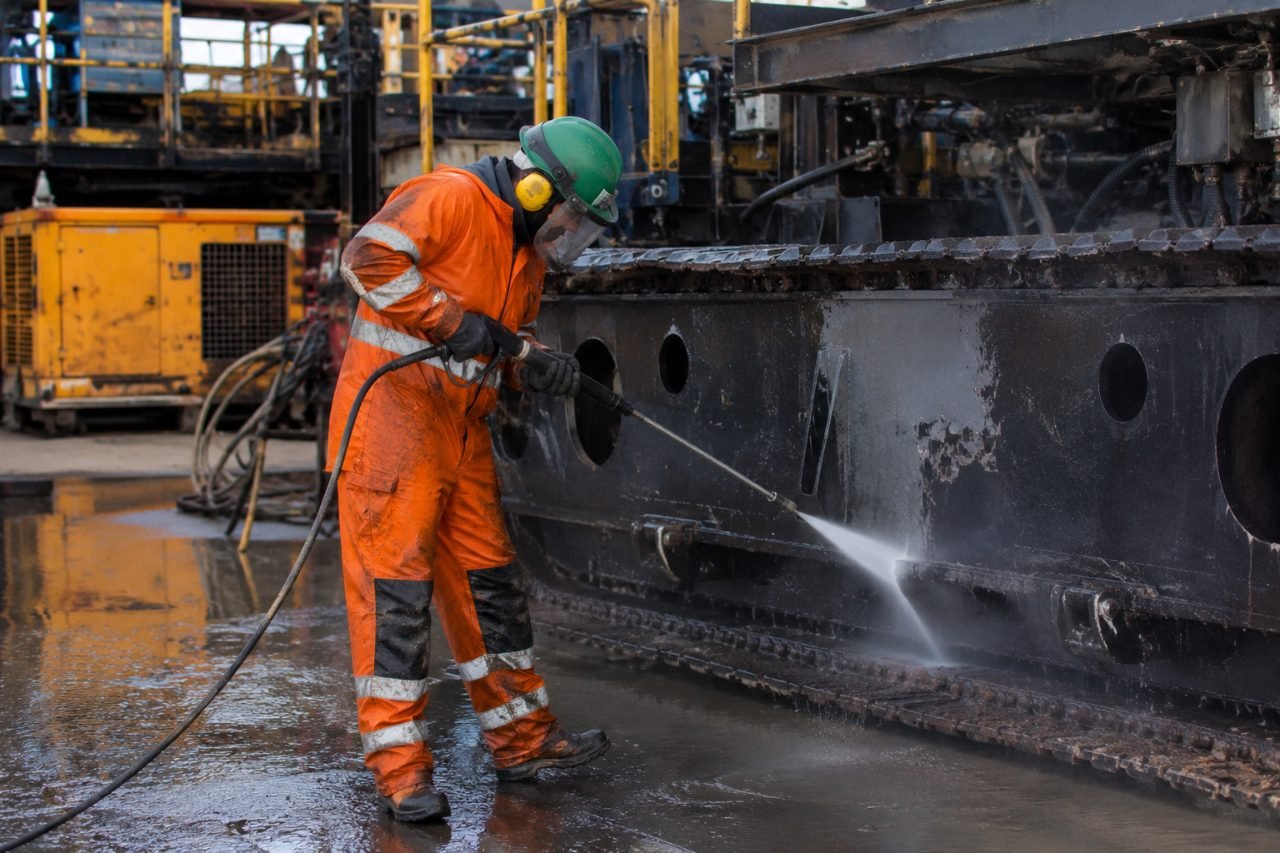
What we clean
Typical industrial and commercial pressure washing work.
Factory floors
Production areas, walkways and machine surrounds cleaned back for safety and housekeeping.
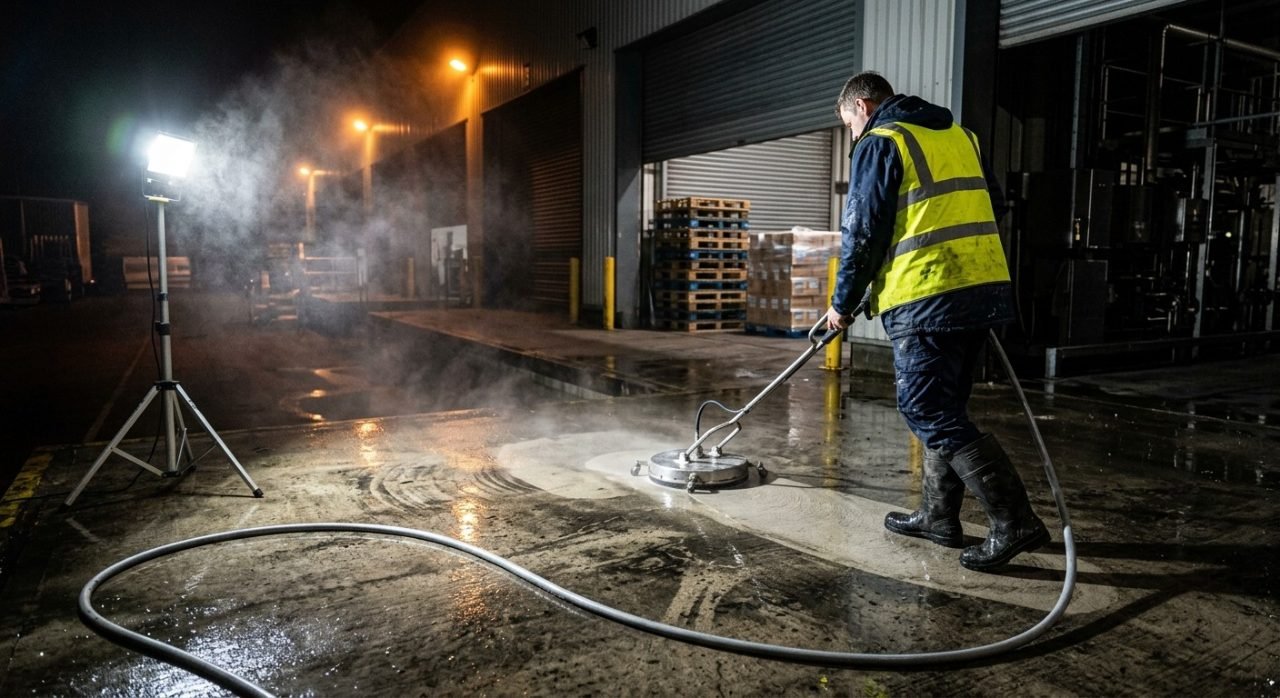
Warehouses
Floors, racking, dock areas and roller door surrounds, including tyre marks and dust buildup.
Concrete & hardstand
Yards, laydown areas, wash bays, car parks and access roads.
Oil & grease removal
Spills, leaks and long-term staining treated with industrial degreasers.
Heavy-duty degreasing
Plant rooms, wash bays, workshop floors and pits.
Machinery & plant
Robust equipment, frames and structures where water is acceptable.
Building exteriors
Cladding, walls, awnings and entries brought back for commercial property presentation.
Industrial washdowns
Whole-area washdowns during shutdowns or before an audit or inspection.
Preparation washing
Surfaces cleaned and degreased before blasting, painting or coating begins.
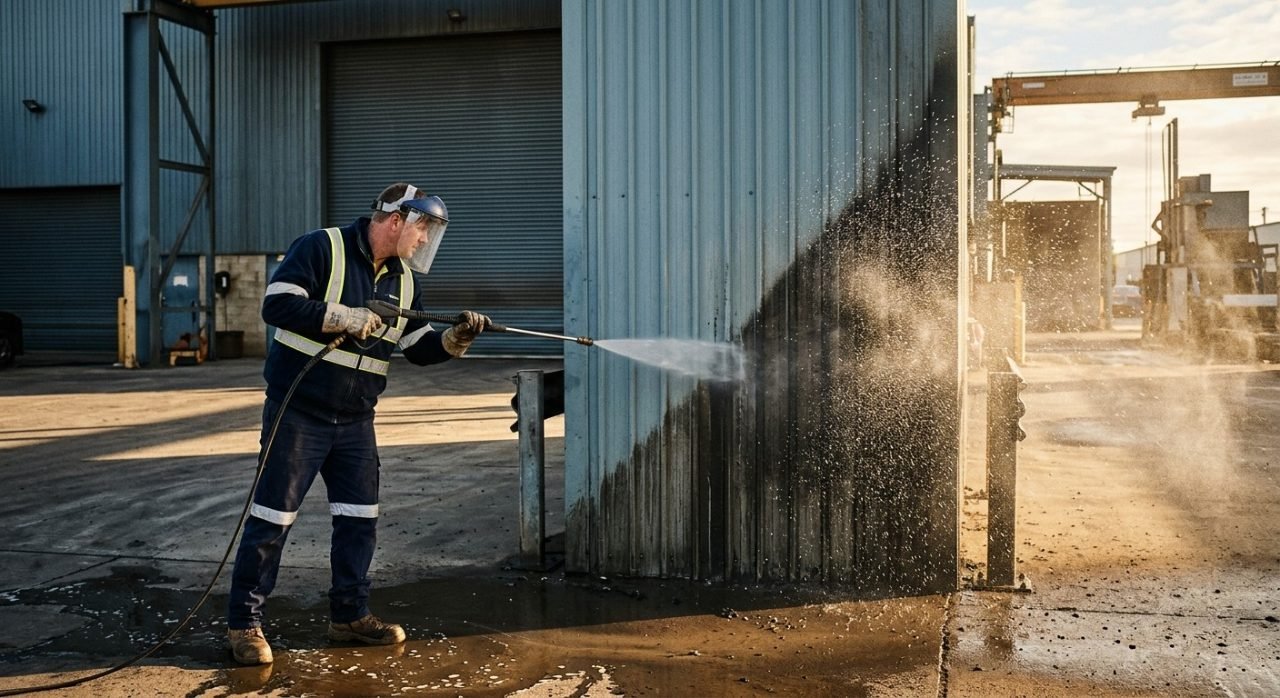
What a proper washdown gets you
Safer floors
Oil, grease and product residue are slip hazards. Removing them is the cheapest safety improvement on most sites.
Audit and inspection ready
Housekeeping standards, client walkthroughs and compliance inspections handled before they become a finding.
Condition you can see
Clean concrete and steel show cracks, leaks and wear that contamination was hiding.
Ready for coating
A degreased, clean surface is the starting point for protective coatings and repainting.
Scheduled, not reactive
Recurring visits keep the site presentable and cost less than an emergency clean-up.
Out of hours
Night, weekend and shutdown work so wet floors never sit in the middle of a production shift.
Who we clean for
Sectors across Melbourne and regional Victoria.
Washing is often the first stage of a bigger job — see abrasive blasting for surface preparation, or painting & coatings for floor and structural coating systems.
How a cleaning job runs
Site walk
Areas, surfaces, contamination type and access reviewed — usually with your maintenance or facilities contact.
Method & water plan
Pressure, temperature, chemicals and runoff containment agreed to suit the surface and your site rules.
Preparation
Isolation of sensitive equipment, protection of stock and signage for wet areas.
Cleaning
Degrease, dwell, wash and rinse, worked area by area so operations can continue around us.
Handover
Area cleared, water managed and the result walked through with you before we leave.
Pressure cleaning questions
Can you clean factories and warehouses?
Yes — floors, walls, racking, dock areas, plant surrounds and external hardstand. Work is scheduled around production or out of hours so wet areas are not in the way of a shift.
How much pressure do you use?
As much as the surface can safely take, and no more. Concrete and structural steel tolerate high pressure; cladding, coated floors and older brickwork do not, so there we lower the pressure and rely on degreasers, hot water and dwell time.
Will oil stains come out of concrete completely?
Surface contamination lifts. Oil that has soaked deep into porous concrete over years will usually lighten significantly rather than disappear entirely — we will tell you what to realistically expect before we start rather than after.
How is waste water managed?
Runoff, containment and drainage are agreed with your site before work starts so water goes to the correct point in line with your site's requirements.
Do you provide recurring maintenance cleaning?
Yes. Monthly, quarterly or aligned to your maintenance calendar. Recurring visits are cheaper and less disruptive than waiting until the site needs a full recovery clean.
Can you clean machinery and electrical equipment?
Robust plant and structures, yes. For electrical gear, motors, switchboards and anything where water is a risk, dry ice blasting is the appropriate method.
Do you service regional Victoria?
Yes — all of Victoria, including Geelong, Ballarat, Bendigo, Shepparton, Wodonga and Gippsland. Multi-site operators can run every location through one contractor.